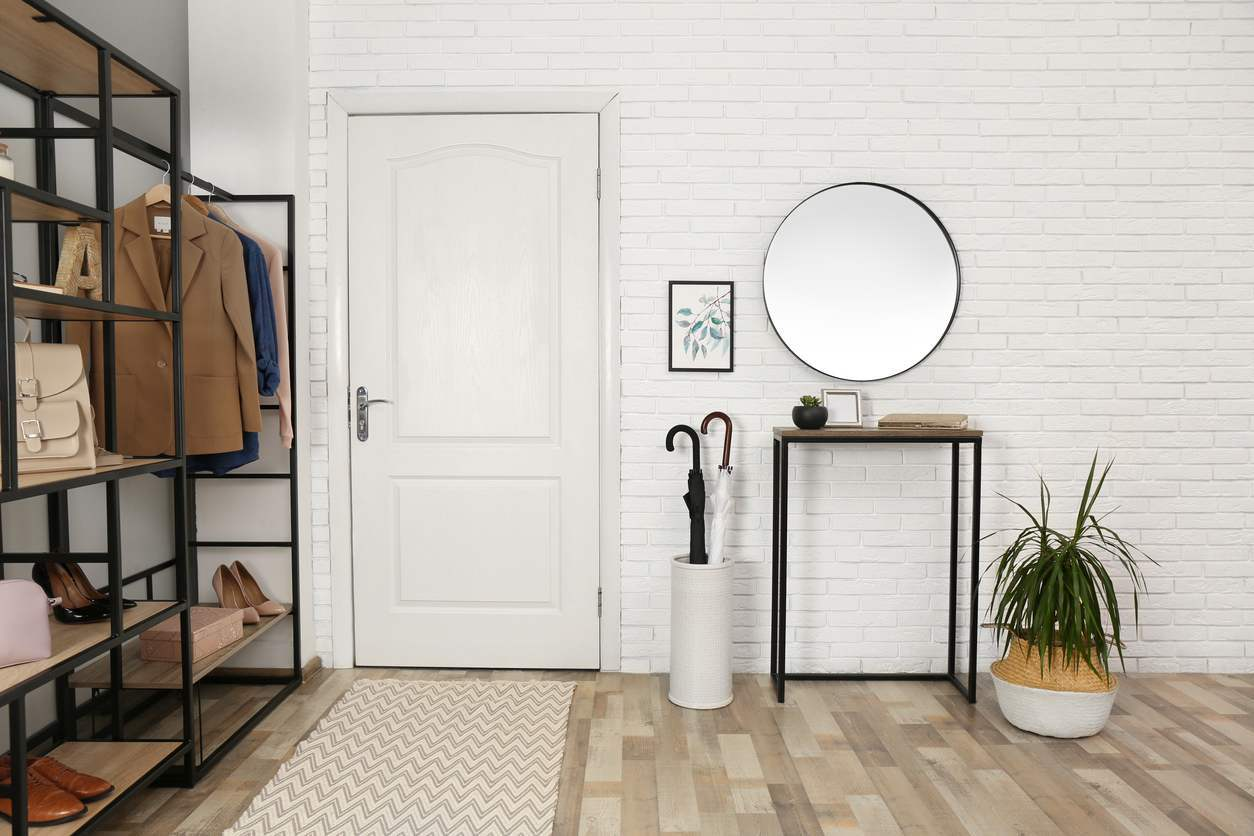
During renovation consultations, the most common thing homeowners say is, “I have so much stuff, fill every available space with cabinets!”
People generally believe that the more cabinets they have, the better they can solve the clutter problem.
The reality is often quite different:
after six months of living there, the wardrobe is so crammed that it’s difficult to even open the doors; packages, clothes, and miscellaneous bags are still scattered around the bed and sofa.
The wardrobe is indeed large, but the chaos persists.
Why does this paradox of “the more cabinets, the messier” occur?
Because a cabinet only provides volume , it doesn’t automatically come with order .
A tall cabinet lacking internal structure is essentially just a giant cardboard box. Once you stuff something inside, it becomes a “black hole,” swallowing all the items and making them impossible to find when you need them.
If we want these large, custom-made cabinets to be truly functional, we must move beyond the mindset that “the bigger the cabinet, the better” and incorporate home storage system planning techniques .
Only by breaking down massive cabinets into “rational storage units” can we truly achieve effortless access and prevent disarray over time.
Below, we’ll discuss whole-house storage from the “furniture shell” to the “internal soul structure,” teaching you step-by-step how to squeeze every inch of space out of your home.
1. Furniture structure determines the lower limit of storage: Stop being obsessed with “walls full of shelves”.
The reason why many wardrobes become increasingly cluttered over time is that they have too many shelves and too few drawers .
1. The “Abyss Effect” of Sheets
A standard wardrobe is about 60cm deep—it seems spacious, but in actual use, you’ll find that the shelves are the beginning of a disaster:
You can never
reach the back of the clothes if you want to get them from the inside; you have to take everything out from the front.
The more
clothes are folded, the messier they become. No matter how neatly clothes are folded, if you take out just one piece, the middle pile will immediately collapse.
Deep waste
means pushing things away until they “disappear,” and then repeatedly buying the same items.
Shelves are great for storing large, fixed, and infrequently moved items, but they are definitely not a good option for everyday clothes.
2. Drawers are the key to improving efficiency.
In short: Use drawers if possible, never use shelves.
The advantages of drawers are very obvious:
Transforming “60cm depth” into “an unobstructed plane”.
Using the “vertical folding method” (arranging items vertically like folders) makes them easier to access.
It won’t get more and more messy.
Although drawers cost more to manufacture than shelves, the increased efficiency they bring is visible in the long run—a “one-time investment, daily benefit.”

II. Space Utilization Techniques for Large Furniture Items: Beds and Entryway Cabinets are Hidden Storage Goldmines
Besides wardrobes, the most space-saving items in the home are beds and entryway cabinets.
1. Under the bed: A large storage space that is most easily overlooked in small apartments.
Many minimalist high beds look nice, but they waste two or three square meters of valuable floor space.
A more practical option: a box bed with hydraulic rods.
It can help you store:
Thick quilts, blankets, and seasonal coats
Giant suitcase
Pillows and comforters used infrequently
Irregular large items
The space under a 1.8m bed is roughly equivalent to that of a four-door wardrobe, making it a true “hidden storage room”.
2. Entryway cabinet: A “prime open area” must be reserved.
Why do keys and masks still end up scattered everywhere even when the entryway cabinet is full?
Because—you haven’t given them a designated place to put them.
Best practice:
Leave an open shelf at a height of 85–110 cm from the ground .
No doors, no partitions, just an “empty countertop”.
This “drop area” can hold your keys, masks, delivery knife, change, name tag, etc. when you get home.
Just put them down casually so they can stay in place.
III. Don’t worry if you’ve already bought the furniture: Use “small renovations” to save unusable cabinets.
If your home is already dominated by shelves, don’t despair, internal optimization can save the day.
1. Use telescopic frames and hanging baskets to improve “spatial granularity”.
Many cabinets have a shelf height of 30cm, while your items are only 10-15cm high, resulting in half of the space being wasted.
Solution:
Lower hanging basket (no installation required, simply hang it on the edge of the shelf).
Telescopic partition (height adjustable)
Small shelf
You can double the capacity for just a few dollars.
2. “Drawer-like” deep cabinets: multi-functional storage baskets
The most difficult thing about deep closets is that you can’t reach the back.
The simplest way to improve this is:
Group items using matching storage baskets.
Label the basket
To use it, simply pull out the entire basket, just like a drawer.
It solves the problem of things being hard to access deep inside, and also ensures that the interior is uniform and tidy.

IV. Storage is not just about hiding, but also about showcasing: making sure that the “revealing and concealing” of space are both well-organized.
There’s a golden ratio for whole-house storage – the 80/20 rule .
1. 80% Enclosed Storage: Hide away clutter.
include:
Stockpiling (tissues, laundry detergent)
Cleaning tools
colorful little items
seasonal clothing
Irregular debris
Enclosed cabinets are their final destination.
2. 20% Showcase Storage: Bringing Warmth and Comfort to Your Home
Show off the “good-looking things”:
Travel souvenirs
books
Vases, Aromatherapy
Small art pieces
This part determines whether a home has “style”.
Conclusion
Whether a home is tidy or not is never determined by the number of cabinets, but rather by:
Is the furniture structure reasonable?
Is the partitioning scientific?
Does the internal system conform to daily habits?
A cabinet gives you space, but what truly brings order is the internal logic you create for it .
If you start understanding how to use space and the movement of items from today, you can truly achieve the ideal state of your home—a place that remains tidy even after long-term living and where everything has its place.